
What is a landing page
If you're running paid ads and visitors aren't converting, you're burning money. Here's what a landing page is, how it differs from a website, and when to use each.


You have a business. You put money into ads or social media. People land on your website. And then... nothing. They leave without doing anything. No call, no message, no purchase.
The problem, almost always, isn't the ad. It's where you're sending those people.
A website and a landing page are not the same thing
A website is your full online presence. It has service pages, gallery, blog, about us, contact. It's for people who already know you, for Google to find you, for someone who searched your name to confirm you exist.
A landing page has a single goal. One action you want the visitor to take. And everything on that page is designed to make that action happen.
When do you need a landing page?
The rule is simple: whenever you invest in driving traffic with a specific goal, you need a landing page. Not your full website.
Google or Meta ads
If someone clicks an ad that says "Air conditioning installation in Córdoba" and lands on your company homepage, you've already lost them. They don't know what to do. They see options. They leave.
If they land on a page that says exactly that, shows the price, explains how the service works, and has a WhatsApp button: you convert.
Promotions or launches
You're launching a new product or running a time-limited promo. You don't want the visitor wandering around your site. You want them to do one thing: take the offer.
Lead capture forms
You offer something in exchange for contact info: a free consultation, a quote, a PDF. A landing page with that single goal converts far better than a form buried somewhere on your website.
What a high-converting landing page needs
Removing the menu isn't enough. A well-built landing page has specific elements, in a specific order, with a clear purpose.
1. A headline that speaks to the result, not the service
"Professional web design" means nothing to anyone. "Get more clients with a website that works while you sleep" speaks directly to the person who has that problem.
2. A subtitle that explains how
The headline grabs attention. The subtitle says who you are and what you do. That's when you get specific: service, location, target audience.
3. Visible social proof
Client reviews, case studies, logos of brands you've worked with. People don't believe what a company says about itself. They believe what others say.
4. One clear and singular call to action
One button. One action. "Request your quote", "Message us on WhatsApp", "Reserve your spot". Don't give options: lead.
5. No navigation menu
A menu is an invitation to leave. In a landing page, every exit that isn't the desired action is a lost conversion. Removing it directly impacts results.
Landing page vs. website: they're not mutually exclusive
It's not about choosing one or the other. A serious business needs both.
The website builds authority, ranks on Google, gives context to people who search you directly. The landing page converts paid traffic and specific campaigns.
The ideal combination is: a solid website as your foundation, and targeted landing pages for each campaign or service you want to push.
“A well-built landing page isn't an expense. It's where your advertising investment finally turns into clients.”
How long does a landing page take?
At Synttek we deliver landing pages in 7 to 14 business days, depending on complexity and whether the client already has copy and images. The process includes design, development, form or WhatsApp integration, and mobile and speed optimization.
If you're running active ads and your current site isn't converting, that's the first problem to solve.
You might also like
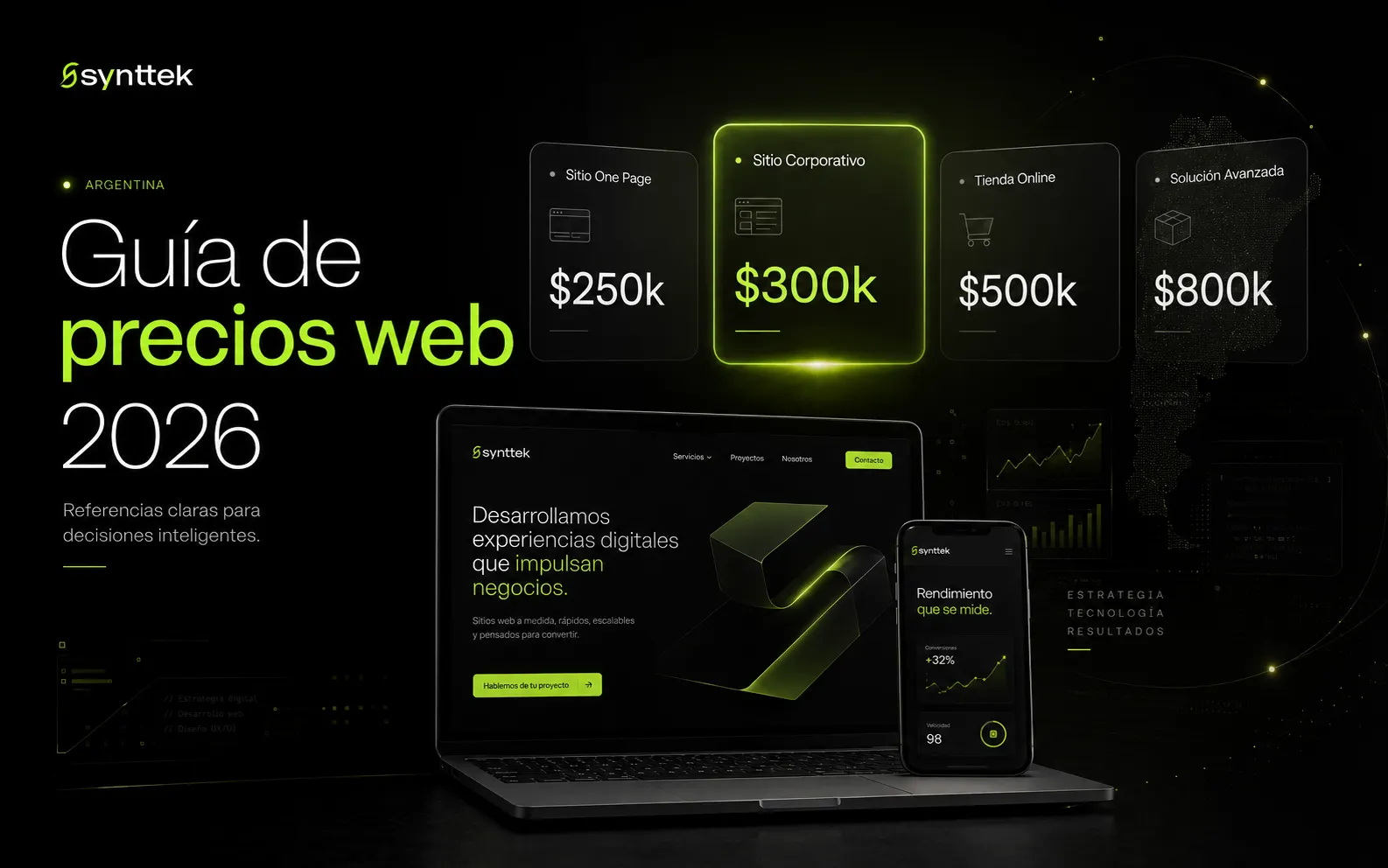
How much does a website cost in Argentina in 2026
A clear guide to understand how much a professional website can cost in Argentina, what each type of project includes, and how to choose the right option for your business.

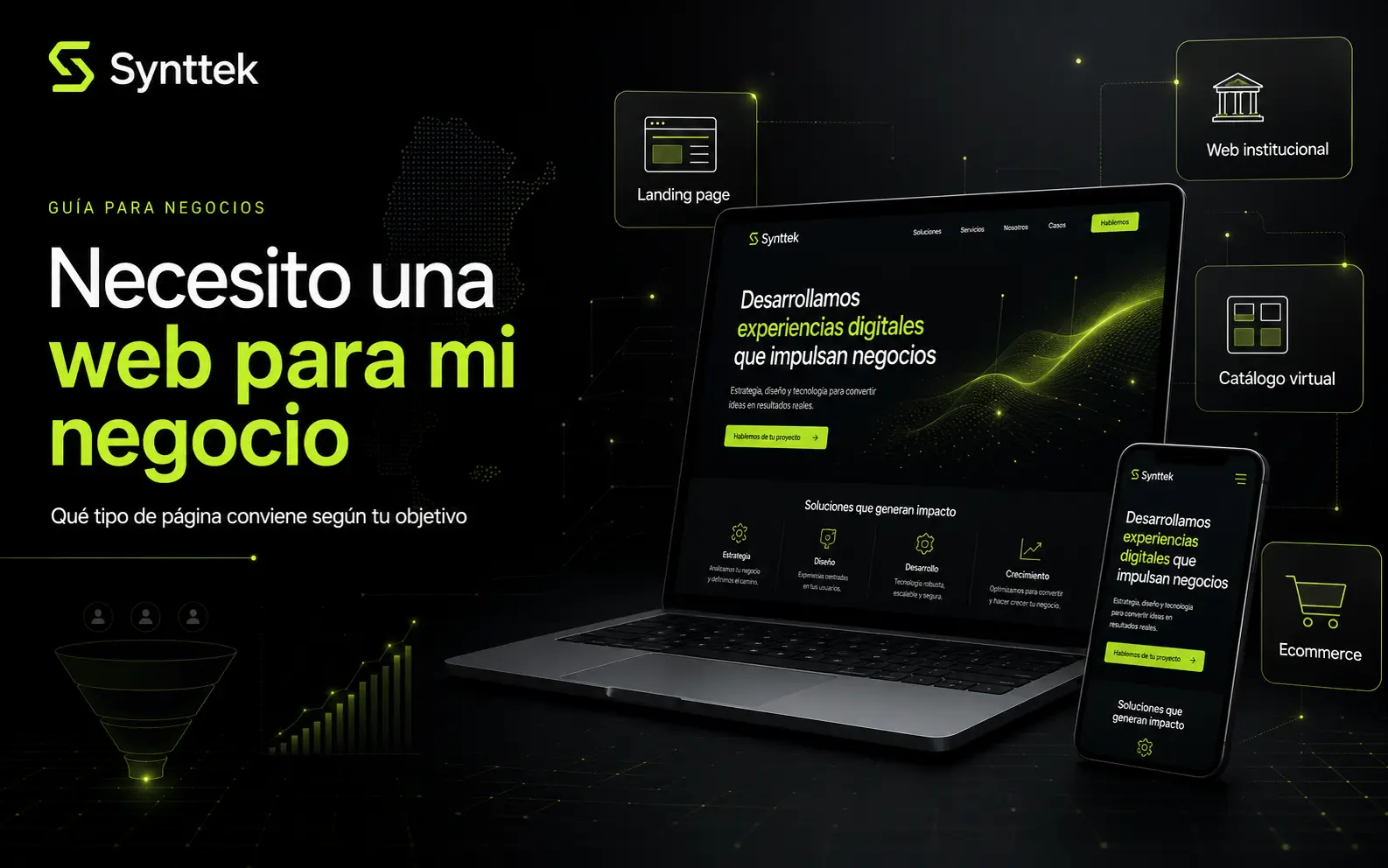
I need a website for my business: where to start and what type of site makes sense
If you feel your business needs a website, this guide helps you understand what type of site makes sense, what it should include, and how to avoid paying for something that does not respond to your real goals.