
Social media design: how to make your brand look more professional
Posts, stories, carousels, covers, and visual pieces can completely change how a brand is perceived. In this guide, we explain what social media design includes, when it makes sense to hire it, and how to use it strategically.

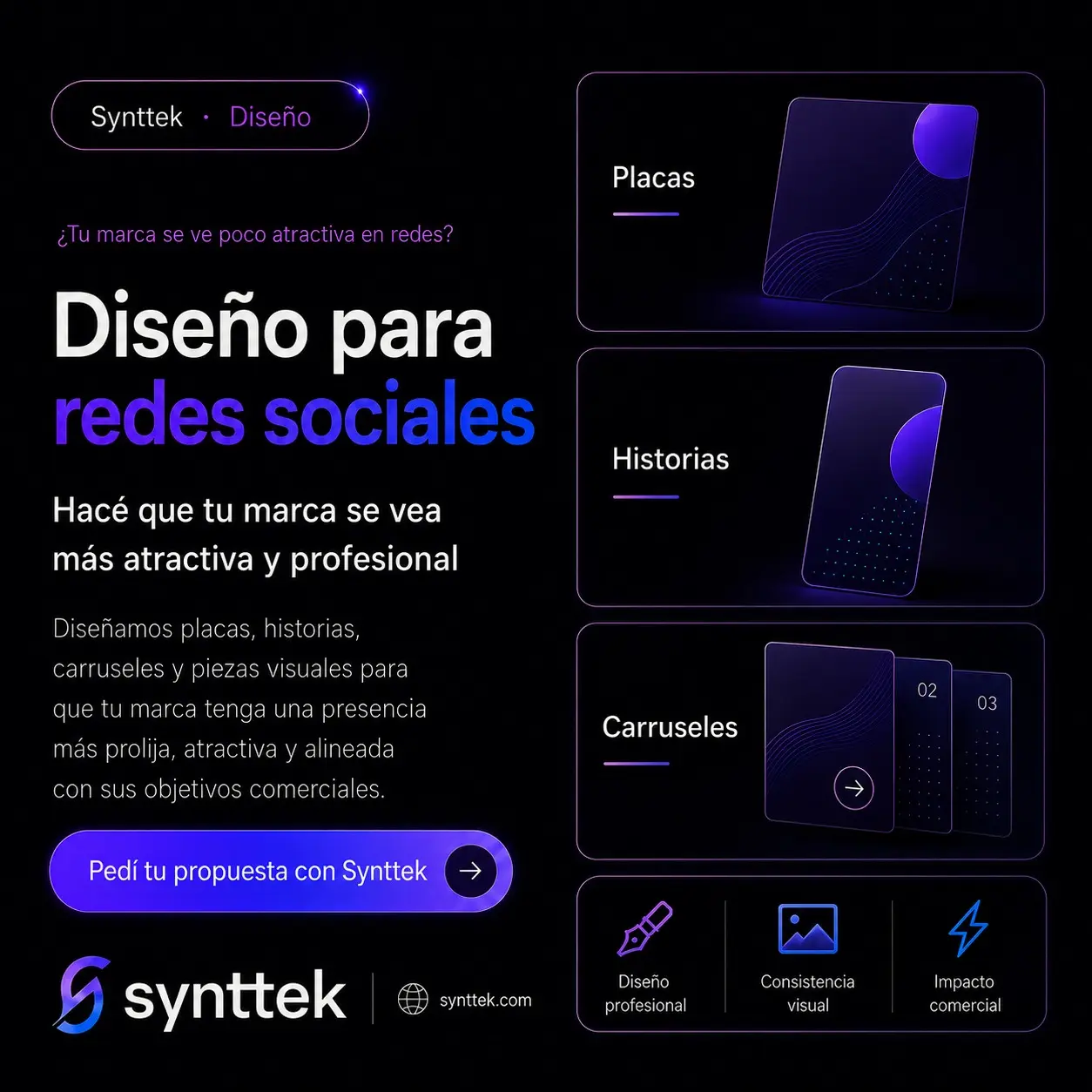
When a business starts taking its digital presence seriously, one of the first needs that appears is simple: improving how it looks on social media.
Instagram, Facebook, LinkedIn, or TikTok are not just channels for posting content. They also work as a digital storefront. Many people discover a brand for the first time through a post, a story, a reel, or a highlight cover.
What social media design is
Social media design is the creation of visual pieces designed to communicate a brand on digital platforms. It can include feed posts, stories, carousels, reel covers, ads, banners, thumbnails, templates, and graphic content for campaigns.
But design should not start in the tool. Before opening Canva, Figma, Photoshop, or Illustrator, there is a more important question: what does the brand need to communicate and what action do we want the person seeing that piece to take.
“A nice post can catch attention. A well-planned post can build trust and generate action.”
Why your business needs a consistent visual identity on social media
A brand that posts with different styles, colors, fonts, and messages all the time can look improvised, even if the product or service is good. Lack of visual consistency makes it harder to remember the brand and understand what it offers.
On the other hand, when visual pieces follow the same aesthetic line, the brand starts feeling stronger. The user recognizes the content faster, perceives more professionalism, and understands the message better.
What pieces social media design includes
Social media design can adapt to different goals: selling, educating, informing, positioning, announcing a promotion, or simply maintaining an active and professional presence.
Social media design is not just making pretty posts
One of the most common mistakes is thinking that social media design is only about making attractive posts. Aesthetics matter, but if the piece does not communicate well, is not understood, or has no clear intention, the design is incomplete.
A good social media piece should answer at least four questions: what needs to be communicated, who it is for, what the person should understand, and what action they should take next.
Design with a commercial goal
If the goal is to sell, the design needs to highlight the product, benefit, promotion, or call to action. Looking good is not enough: it needs to help the person move forward.
Design with an educational goal
If the goal is to educate, the piece needs hierarchy, rhythm, and clarity. Carousels, for example, work better when each slide has one specific idea and guides the user step by step.
Design with a brand goal
If the goal is to position the brand, visual consistency becomes essential. Colors, fonts, tone, composition, and style should build a recognizable feeling over time.
When it makes sense to hire social media design
Not every business needs to post every day, but almost every business needs to look professional when someone enters its profile. If your social media is the first point of contact with potential customers, design stops being a detail.
It also makes sense to hire design when you are about to launch a new service, organize monthly communication, professionalize your brand, create campaigns, or prepare content to sell better.
What good social media design should have
Good social media design does not depend only on an attractive image. It needs visual judgment, hierarchy, consistency, and adaptation to the format where it will be published.
Clear visual identity
The brand should have defined colors, fonts, graphic styles, and composition criteria. This allows every post to feel part of the same system.
Information hierarchy
Not everything can have the same weight. Good design defines what is read first, what supports it, and what action is expected from the user.
Adaptation to each format
A story is not designed the same way as a feed post, a reel cover, or a carousel. Each format has different reading times, proportions, and behaviors.
Specific message
A visual piece should communicate one main idea. When a post tries to say too many things at the same time, it loses strength and becomes harder to understand.
Common mistakes in social media design
Using too many styles at the same time
Changing colors, fonts, backgrounds, and styles in every post can make the profile look messy. Variety is useful, but it needs a consistent visual base.
Putting too much text in one piece
Social media is consumed quickly. If the user has to make too much effort to understand a post, they will probably skip it. Design should simplify, not complicate.
Designing without strategy
Posting just for the sake of posting can keep a profile active, but it does not necessarily build a brand. Design works better when it responds to a communication strategy.
Copying trends without adapting them
Trends can be useful as references, but not all of them fit every brand. A viral aesthetic can catch attention, but if it does not represent the business, it can create the wrong perception.
How we work on social media design at Synttek
At Synttek, we design visual pieces for social media with a strategic perspective. We do not only aim for a post to look good, but for it to help communicate better what the brand offers.
We can design feed posts, stories, carousels, reel covers, templates, and visual systems so your brand has a cleaner, more attractive presence aligned with its commercial goals.
“The goal is not to fill the feed. The goal is to build a visual presence that makes your brand easier to understand, remember, and perceive.”
Social media design: an investment in perception
Every post communicates something, even when it is not well designed. It can communicate professionalism, clarity, and trust; or it can communicate improvisation, disorder, and lack of judgment.
That is why investing in social media design is not only investing in aesthetics. It is investing in how people perceive your brand before messaging you, asking for a quote, or buying.
You might also like

How much does a website cost in Argentina in 2026
A clear guide to understand how much a professional website can cost in Argentina, what each type of project includes, and how to choose the right option for your business.


I need a website for my business: where to start and what type of site makes sense
If you feel your business needs a website, this guide helps you understand what type of site makes sense, what it should include, and how to avoid paying for something that does not respond to your real goals.